 Hello World KitchenBeta
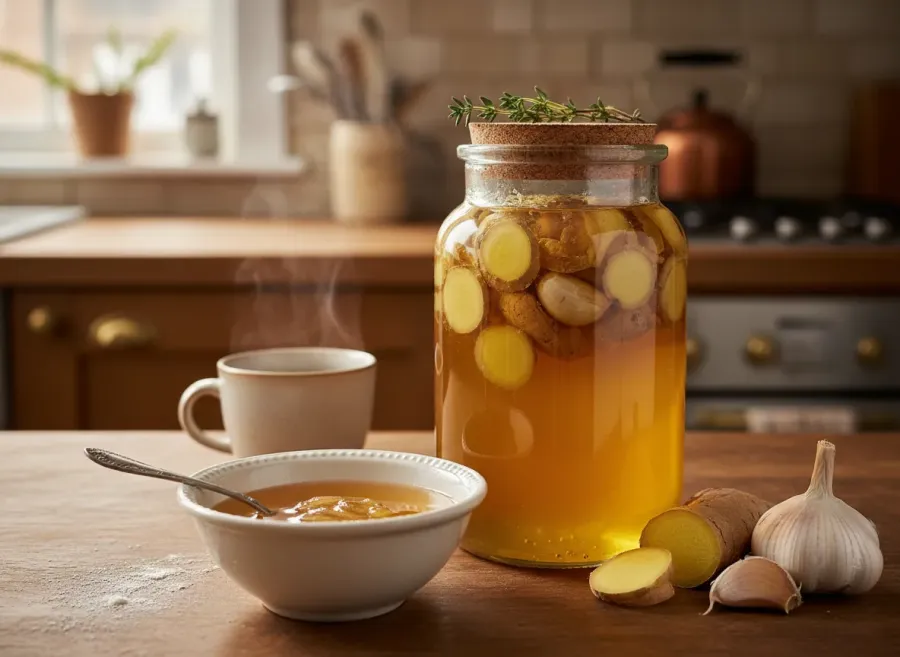
A sweet, pungent, and immune-boosting lacto-fermented honey infused with raw garlic and fresh ginger. As it ferments, the honey thins into a savory-sweet syrup that is perfect for soothing teas, fighting off winter chills, or brushing over roasted meats and vegetables.
Ingredients
Main
- 1 cup Garlic — Peeled and lightly crushed with the flat side of a knife
- 0.5 cup Fresh ginger — Peeled and thinly sliced
- 1.5 cups Raw honey — Must be raw and unpasteurized for fermentation to occur
Instructions
-
Prepare the aromatics. Peel the garlic cloves and give them a very light crush with the flat side of your knife to release the juices. Peel the ginger and cut it into thin slices.
~10 minCrushing the garlic slightly helps release its allicin and moisture, which thins the honey and kickstarts fermentation. -
Place the crushed garlic and sliced ginger into a clean, dry 1-pint glass jar. Fill the jar roughly half to two-thirds full of the aromatics.
~2 minMake sure your jar is thoroughly cleaned and dried to prevent unwanted mold. -
Pour the raw honey over the garlic and ginger, leaving about 1 to 1.5 inches of headspace at the top of the jar. Stir gently or poke with a chopstick to remove trapped air bubbles.
~3 minThe honey must be RAW. Pasteurized honey lacks the natural wild yeasts and bacteria needed for lacto-fermentation. -
Seal the jar loosely with the lid. Flip the jar upside down for a few minutes to ensure the garlic and ginger are completely coated in honey, then flip it right-side up.
Coating the aromatics in honey prevents mold growth on exposed surfaces. -
Place the jar on a small plate in a dark, room-temperature cabinet. For the first two weeks, 'burp' the jar daily by slightly unscrewing the lid to release built-up carbon dioxide gas. You will notice bubbles forming and the honey becoming watery.
~336hBurping is a critical safety step! Failing to release the gas can cause pressure to build up, potentially shattering the glass jar. -
After about two weeks, the bubbling will slow down significantly. You can stop daily burping and leave it to age for at least another 2 weeks before using. The flavor improves and mellows over time.
~384hThe garlic cloves may turn blue or green during fermentation. This is a normal, safe enzymatic reaction!
Nutrition
Equipment
- 1-pint glass Mason jar with a tight-fitting lid
- Cutting board
- Chef's knife
Tips & Storage
- Safety first: Raw honey and lacto-fermented honey should never be given to infants under 1 year of age due to the risk of infant botulism.
- Botulism in adults is highly unlikely in this recipe because honey's natural acidity (pH ~3.9) and high sugar content create a hostile environment for botulinum spores. As the garlic releases juices, the wild yeasts ferment them, increasing acidity further.
- If the garlic/ginger floats to the top, simply flip the jar upside down daily (make sure the lid is tight first!) to keep them coated.
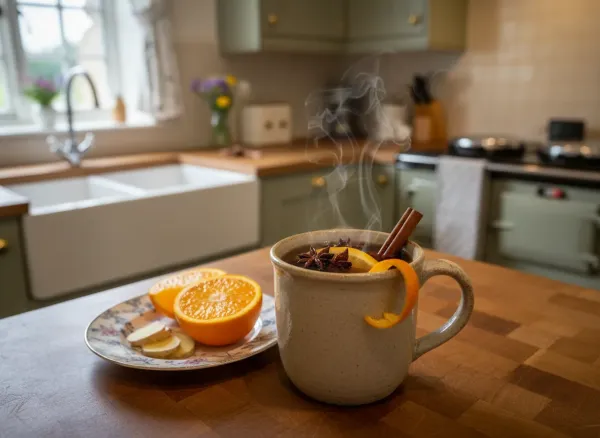
- Usage idea: Stir 1 tablespoon of the fermented honey syrup into a mug of hot water with lemon for a soothing cold-weather tea.
- Usage idea: Use the thinned, savory-sweet honey as a glaze for roasted carrots, Brussels sprouts, chicken wings, or salmon.
- Usage idea: Finely chop the fermented garlic cloves and add them to stir-fries or salad dressings for a sweet, pungent kick.
- Storage: Store the jar in a cool, dark cupboard. Because of the honey's preservative qualities and the acidic fermentation environment, it can be kept at room temperature for up to a year or longer. The garlic will soften and mellow the longer it sits.
Tags
🤖 This recipe was created with AI assistance. If you spot a mistake or something that doesn't look right, please report it.