 Hello World KitchenBeta
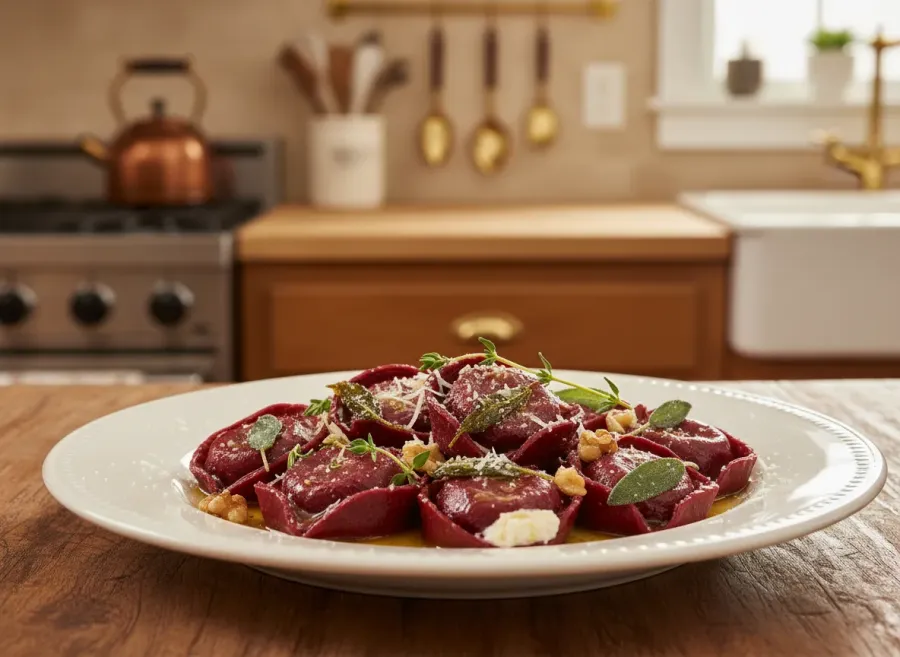
Vibrant, handcrafted beetroot pasta filled with a creamy, earthy mixture of goat cheese and toasted walnuts, tossed in a delicate brown butter and sage sauce.
Ingredients
Beetroot Pasta Dough
- 2.5 cups Tipo 00 flour — Plus extra for dusting
- 0.33 cup Beetroot puree — Roasted or boiled beets, blended until completely smooth
- 2 whole Large eggs — Room temperature
- 0.5 teaspoon Salt
Goat Cheese & Walnut Filling
- 6 ounces Soft goat cheese (chèvre) — Room temperature
- 0.25 cup Ricotta cheese — Drained if watery
- 0.5 cup Walnuts — Toasted and finely chopped
- 0.25 cup Parmesan cheese — Freshly grated
- 1 tablespoon Fresh thyme — Finely chopped
- 0.25 teaspoon Black pepper — Freshly cracked
- 1 teaspoon Honey (optional)
Brown Butter Sage Sauce
- 6 tablespoons Unsalted butter
- 12 leaves Fresh sage leaves
- 0.25 cup Parmesan cheese (optional) — For serving
Instructions
-
In a food processor, blend the beetroot puree, eggs, and salt until completely smooth and vibrant.
~2 minEnsure the beetroot puree has no chunks, or it will tear the pasta dough later. -
Mound the flour on a clean surface, create a deep well in the center, and pour the beetroot mixture into the well. Using a fork, gradually incorporate the flour into the liquid until a shaggy dough forms.
~5 min -
Knead the dough by hand for 8-10 minutes until smooth and elastic. If it's too sticky, add a dusting of flour; if too dry, wet your hands. Wrap tightly in plastic wrap and let it rest at room temperature.
~10 minResting is crucial for relaxing the gluten so the dough can be rolled thinly. -
While the dough rests, prepare the filling. In a medium bowl, combine the goat cheese, ricotta, finely chopped toasted walnuts, parmesan, thyme, black pepper, and honey. Mix until well combined. Transfer to a piping bag for easier assembly.
~10 min -
Cut the rested pasta dough into 4 pieces. Keep the others wrapped while working. Flatten one piece and pass it through a pasta machine, starting on the thickest setting. Gradually decrease the thickness setting, passing the dough through 2-3 times per setting, until you reach a thin, almost translucent sheet (usually second to last setting).
~15 minDust the dough lightly with flour if it starts sticking to the rollers. -
Using a 3-inch round cutter, stamp out circles from the dough sheet. Pipe or spoon about 1/2 teaspoon of filling into the center of each circle.
~10 min -
To shape the tortellini, lightly moisten the edges of a circle with a dab of water. Fold it in half to create a half-moon, pressing firmly around the filling to expel any air and seal the edges. Take the two points of the half-moon, wrap them around your index finger, and pinch them together to form the tortellini shape.
~20 minKeep shaped tortellini on a semolina-dusted baking sheet and cover with a dry towel so they don't dry out. -
Bring a large pot of generously salted water to a gentle boil. Carefully drop in the tortellini and cook until they float to the top and the pasta is al dente, about 3-4 minutes.
~5 minUse a gentle boil rather than a rolling boil to prevent the delicate pasta from breaking. -
While the pasta cooks, melt the butter in a large skillet over medium heat. Once it foams, add the sage leaves. Cook until the butter turns golden brown and smells nutty, about 3-4 minutes. Remove from heat immediately to prevent burning.
~4 min -
Using a slotted spoon, transfer the cooked tortellini directly into the brown butter sauce. Toss gently to coat. Serve immediately, garnished with crispy sage leaves and extra grated parmesan.
~2 minAdd a splash of pasta water to the skillet if the sauce needs to be emulsified slightly.
Nutrition
Equipment
- Pasta machine
- Food processor
- Mixing bowls
- Large pot
- Large skillet
- Piping bag (optional)
- Round pastry cutter (3-inch)
Tips & Storage
- Roast the beets ahead of time, or use high-quality store-bought precooked beets to save prep time.
- Make sure the walnuts are chopped very finely so they don't pierce the delicate pasta dough from the inside.
- Uncooked tortellini can be frozen on a baking sheet, then transferred to a zip-top bag for up to 2 months. Cook directly from frozen, adding an extra minute to the cooking time.
- Storage: Store leftover cooked tortellini in an airtight container in the refrigerator for up to 3 days. Reheat gently in a skillet with a splash of water or butter to revive the sauce.
Tags
🤖 This recipe was created with AI assistance. If you spot a mistake or something that doesn't look right, please report it.