 Hello World KitchenBeta
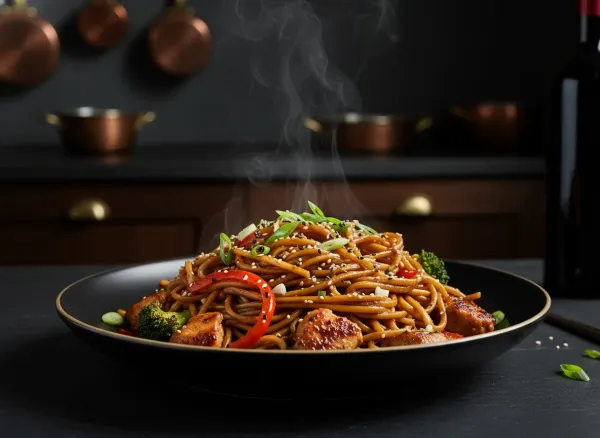
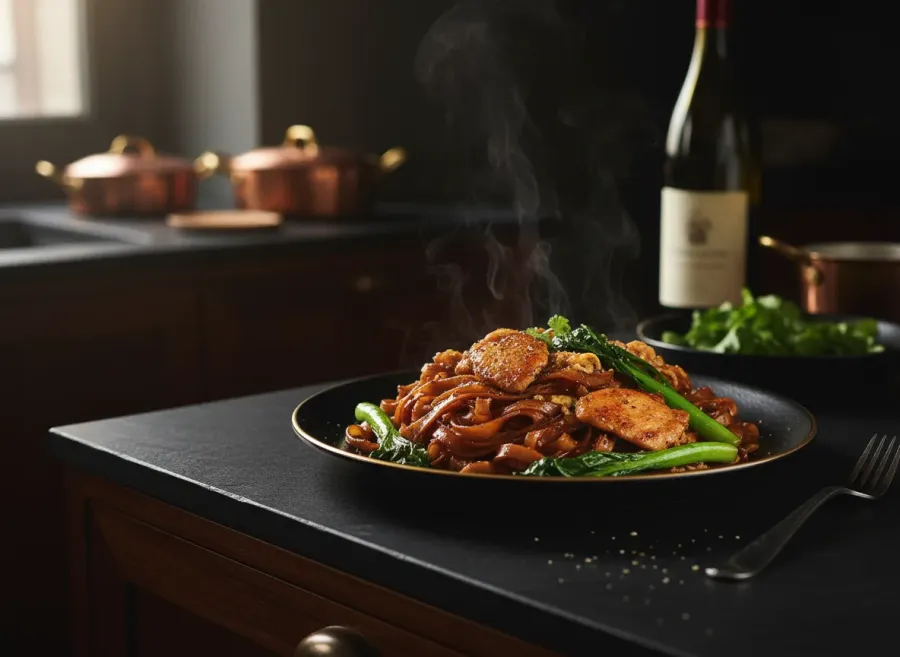
A classic Thai street food favorite featuring chewy wide rice noodles, tender chicken, and crisp Chinese broccoli (gai lan) tossed in a perfectly balanced savory-sweet dark soy sauce. This recipe emphasizes high-heat cooking techniques to achieve that signature smoky 'wok hei' (breath of the wok) flavor right in your home kitchen.
Ingredients
Chicken and Marinade
- 8 ounces Boneless skinless chicken thighs — Thinly sliced against the grain
- 1 teaspoons Light soy sauce
- 1 teaspoons Cornstarch — Helps tenderize the chicken (velveting)
Stir-Fry Sauce
- 1.5 tablespoons Dark soy sauce — Provides the signature dark color and sweet molasses flavor
- 1.5 tablespoons Oyster sauce
- 1 tablespoons Light soy sauce
- 2 teaspoons Granulated sugar
- 1 teaspoons White vinegar — Balances the sweetness
Main Ingredients
- 14 ounces Fresh wide rice noodles (Sen Yai) — Separated carefully. If cold/stiff, microwave for 30-60 seconds until pliable.
- 6 ounces Chinese broccoli (Gai Lan) — Stems thinly sliced on a diagonal, leaves roughly chopped
- 3 cloves Garlic — Minced
- 2 whole Large eggs — Lightly beaten
- 3 tablespoons Neutral cooking oil — Canola, peanut, or vegetable oil, divided
- 0.25 teaspoons White pepper — To taste
Instructions
-
In a small bowl, toss the sliced chicken with 1 teaspoon of light soy sauce and 1 teaspoon of cornstarch. Let marinate while you prepare the other ingredients.
~5 minThis technique, called 'velveting', keeps the chicken incredibly tender during high-heat cooking. -
In another small bowl, whisk together the dark soy sauce, oyster sauce, light soy sauce, sugar, and white vinegar until the sugar is dissolved. Set aside.
~2 minHave your sauce mixed and right next to the stove. High heat wok cooking moves too fast to measure ingredients on the fly. -
Heat a wok or large heavy skillet over high heat until it begins to smoke lightly. Add 1 tablespoon of neutral oil and swirl to coat. Add the marinated chicken in a single layer. Sear undisturbed for 1 minute, then stir-fry until completely cooked through. Remove the chicken to a plate.
~3 minDo not overcrowd the pan. If making a larger batch, cook the chicken in batches. -
Wipe the wok clean if necessary. Return to high heat, add another tablespoon of oil. Add the minced garlic and sliced gai lan stems. Stir-fry for 30 seconds until fragrant and slightly tender. Add the gai lan leaves and toss until just wilted. Push the vegetables to one side of the wok.
~2 minCooking the stems before the leaves ensures everything finishes cooking at the same time. -
Add the lightly beaten eggs to the empty side of the wok. Let them set slightly for about 5 seconds, then scramble them roughly with your spatula. Toss the scrambled eggs with the vegetables.
~1 min -
Add the remaining 1 tablespoon of oil to the wok. Add the separated fresh wide rice noodles, the cooked chicken, and the stir-fry sauce. Toss everything together gently to distribute the sauce evenly.
~1 minBe gentle when tossing to prevent the delicate wide noodles from breaking. -
Spread the noodles out in an even layer across the surface of the hot wok. LEAVE THEM ALONE for 15-20 seconds to allow the noodles and sauce to caramelize and char slightly. Toss and repeat spreading them out for another 15 seconds. This is how you achieve 'wok hei' at home.
~1 minResist the urge to stir constantly. The magic of Pad See Ew is the slight burnt edges on the noodles. -
Turn off the heat. Sprinkle with white pepper, give it one final toss, and serve immediately.
~1 minServe with chili flakes, pickled chilies in vinegar, and a wedge of lime on the side if desired.
Nutrition
Equipment
- Carbon steel wok or large heavy cast iron skillet
- Wok spatula
- Cutting board
- Chef's knife
- Small mixing bowls
Tips & Storage
- To achieve wok hei at home, a carbon steel wok over a gas burner is best. If you have an electric stove or induction, a heavy cast iron skillet preheated until very hot will yield better charring than a thin pan.
- If your fresh rice noodles are stiff from refrigeration, microwave them in the package for 30-60 seconds to soften them before trying to separate the strands. Pulling stiff noodles will cause them to break.
- Do not double this recipe in a single wok. Cooking in small batches (1-2 portions at a time) is crucial to prevent the wok's temperature from dropping, which causes steaming instead of searing.
- Storage: Store leftovers in an airtight container in the refrigerator for up to 3 days. Reheat in the microwave with a damp paper towel over the top to help soften the rice noodles, though the texture is best when eaten fresh.
Tags
🤖 This recipe was created with AI assistance. If you spot a mistake or something that doesn't look right, please report it.